
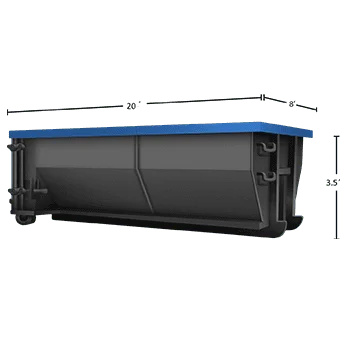
Agree one set of loading instructions
Ask the provider for accepted and excluded materials, fill guidance and any special conditions for dense debris. Share those directions with the people doing the work. A supervisor should resolve questions instead of allowing each trade to interpret the container differently.
If different materials need separate handling, discuss that before delivery. Do not assume sorting can wait until a mixed container is full or that a container selected for bulky contents will suit heavy demolition material.
Reserve space for the task around the container
Describe the loading method and ask about any door operation on the proposed model. Leave the working area needed for carrying, carts or other planned equipment, without channeling people through vehicle movements or blocking access to restrooms.
Have the supplier assess the truck approach, positioning operation and retrieval area. Overhead obstacles, ground conditions and later construction can affect that operation even if the container itself fits neatly on the site.
Plan recovery while the site is still accessible
Set a contact who can keep the loading area and vehicle route clear when collection is arranged. If work is phased, explain any period when fencing, paving or other deliveries may restrict access.
For an exchange, confirm the actual timing and the conditions attached to the next container. Keep the waste stream and permitted loading consistent with the revised order. A proposed sequence is not a guarantee of continuous capacity until the supplier accepts it.
Questions before you book
Should everyone on site receive the loading rules?
Yes. Use one agreed list and a responsible contact so uncertain materials are checked before entering the load.
Is a container exchange automatic when it looks full?
No. Follow the provider’s loading directions and arrange an exchange through the agreed request process.